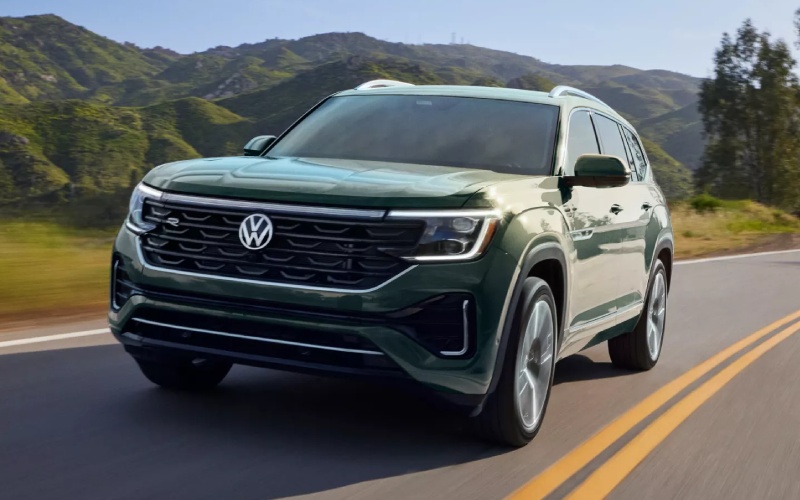
Cardinale Volkswagen Salinas - Which Three-Row SUV Has the Better Driver-Assistance Tech for Pebble Beach, CA — 2026 Volkswagen Atlas or 2026 Honda Pilot?
The question comes up all the time on test drives along 17-Mile Drive and Highway 1: which three-row SUV’s driver-assistance suite feels more natural and more helpful in real traffic — the 2026 Volkswagen Atlas or the 2026 Honda Pilot? Both offer robust systems designed to reduce fatigue and add confidence, but the way those features work together can feel different behind the wheel. This guide dives into how Volkswagen IQ.DRIVE® and Honda Sensing® each support daily driving, from steady highway stretches to tight neighborhood lanes around Pebble Beach, CA.
IQ.DRIVE® in the 2026 Volkswagen Atlas provides a hands-on, semi-automated capability that pairs Adaptive Cruise Control with Lane Assist for lane centering when engaged on marked roads. It is built to feel supportive and straightforward — calm, predictable nudges to help keep the Atlas centered while maintaining following distance, with stop-and-go capability that’s useful in congested resort traffic or after a golf tournament lets out. The system’s communication is clear, so you know when lane centering is actively assisting and when the driver must take full control. Emergency Assist can help bring the vehicle to a controlled stop if the driver becomes unresponsive, adding a layer of reassurance many families value.
How Honda Sensing® approaches assistance
Honda Sensing® brings together the Collision Mitigation Braking System™, Road Departure Mitigation, Lane Keeping Assist, Adaptive Cruise Control with Low-Speed Follow, and Traffic Sign Recognition. On the 2026 Honda Pilot, that suite is standard, and it’s a strong one. Lane Keeping Assist provides gentle steering input to help keep the Pilot centered, and Adaptive Cruise Control with Low-Speed Follow can ease creeping traffic typical near the Lodge or at school pickup. Honda also offers a Multiview camera system with TrailWatch™ on select trims, which is handy for close-quarters maneuvers in tight coastal parking areas. In short, Honda Sensing® is comprehensive and familiar to many drivers, and it shines for day-to-day alerts and steady cruise support.
So how do you decide which approach is better for your drives around Pebble Beach, CA? Consider how you spend most of your time. If your routine blends short freeway hops with neighborhood streets and occasional Highway 1 tours, the feel of lane centering and the clarity of alerts matter a lot. The Atlas puts emphasis on that hands-on, semi-automated steadiness with IQ.DRIVE®, while the Pilot adds helpful camera perspectives and a proven suite of core assists.
Daily usability: what stands out in practice
On a calm weekday, the Atlas’ supportive centering can make a measurable difference in how fresh you feel by the time you pull into Pebble Beach Market. Because the 2026 Atlas also delivers its turbocharged torque early, highway merges are smooth and decisive — a complementary trait when Adaptive Cruise Control is maintaining your gap. Inside, the 12-inch display and available Digital Cockpit Pro present driver-assistance visuals cleanly, so you are never guessing whether systems are active.
In the Pilot, the lane-keeping function is intuitive, and the Low-Speed Follow feature is a relief in tourist-season crawls. Upper trims with TrailWatch™ add confidence in tight parking lots or when nudging close to a curbside spot with ocean views. Honda’s integration of Google built-in also makes route planning seamless on supported trims, and the 10.2-inch digital cluster presents key information clearly. Both SUVs keep the learning curve reasonable — important when alternating between city errands and scenic drives.
A focused comparison checklist
Use the quick points below to match each SUV’s approach to your most common scenarios.
- Highway lane centering feel: The Atlas emphasizes a natural, steady assist through IQ.DRIVE®; the Pilot’s Lane Keeping Assist is supportive and predictable.
- Stop-and-go confidence: Both provide Adaptive Cruise Control with low-speed capability to ease coastal congestion.
- Close-quarters visibility: Pilot’s available Multiview camera with TrailWatch™ shines in tight parking; Atlas counters with available Park Distance Control.
- Driver notification clarity: The Atlas’ Digital Cockpit Pro (available) and 12-inch display clearly show assist status; the Pilot’s 10.2-inch cluster communicates key data efficiently.
- Complementary power delivery: Atlas turbo torque pairs well with assistance in short merges; Pilot’s V-6 feels linear and composed.
Of course, driver-assistance should complement — not replace — attentive driving. The best system is the one you find predictable and easy to manage, day in and day out. That makes a back-to-back test drive the smartest next step.
What to evaluate on your test drive
- Engage lane centering and Adaptive Cruise Control on a marked highway segment. Note steering feel and how smoothly each SUV accelerates and decelerates to match traffic.
- Run a short urban loop to experience low-speed behavior and alert clarity at stoplights and when cars merge around you.
- Practice parking and tight turns to see how camera views and proximity aids support confidence without distraction.
If you’re comparing more than assistance tech, the 2026 Volkswagen Atlas also brings a standard 12-inch center display, Wireless App-Connect®, available Harman/Kardon audio, and an included 3-year Safe & Secure plan on most MY26 vehicles. The 2026 Honda Pilot counters with available Bose premium sound, Google built-in on select trims, a panoramic moonroof on TrailSport and above, and the Multiview camera system on upper trims. Both seat up to eight and can be configured with all-wheel drive, each ready for family weekends and school-week schedules.
Cardinale Volkswagen Salinas is proud to support local drivers with knowledgeable, pressure-free guidance — serving Monterey, Pebble Beach, and Carmel-by-the-Sea. Our product specialists can walk you through how IQ.DRIVE® operates on familiar roads, explains feature availability by trim, and helps you line up an on-road route that reflects your commute and weekend patterns.
Frequently Asked Questions:
Is IQ.DRIVE® standard on every 2026 Volkswagen Atlas?
IQ.DRIVE® is included across the Atlas lineup, providing driver-assistance features with hands-on, semi-automated capability to support everyday driving when engaged.
Does the 2026 Honda Pilot offer a surround or trail camera?
Yes. A Multiview camera system with TrailWatch™ is standard on TrailSport and above, enhancing visibility in tight spaces and on light trails.
Which SUV is easier to learn for new driver-assistance users?
Both provide approachable interfaces. Many shoppers find the Atlas’ combination of clear on-screen prompts, Digital Cockpit Pro (available), and natural lane-centering behavior especially easy to adopt after a short drive, while the Pilot’s consistent alerts and cluster displays feel familiar to long-time Honda drivers.
Can both SUVs help with heavy traffic on Highway 1?
Yes. Each offers Adaptive Cruise Control with low-speed capability and lane-keeping functions designed to reduce driver workload in stop-and-go conditions when engaged and used as directed.
Ultimately, your best answer will come from seat time. Schedule a drive route with gentle curves, a short highway stretch, and a tight parking loop to feel each system’s character. If confidence, calmness, and clarity are at the top of your list, the Atlas tends to make a strong first impression — and a lasting one — on Pebble Beach, CA roads.